
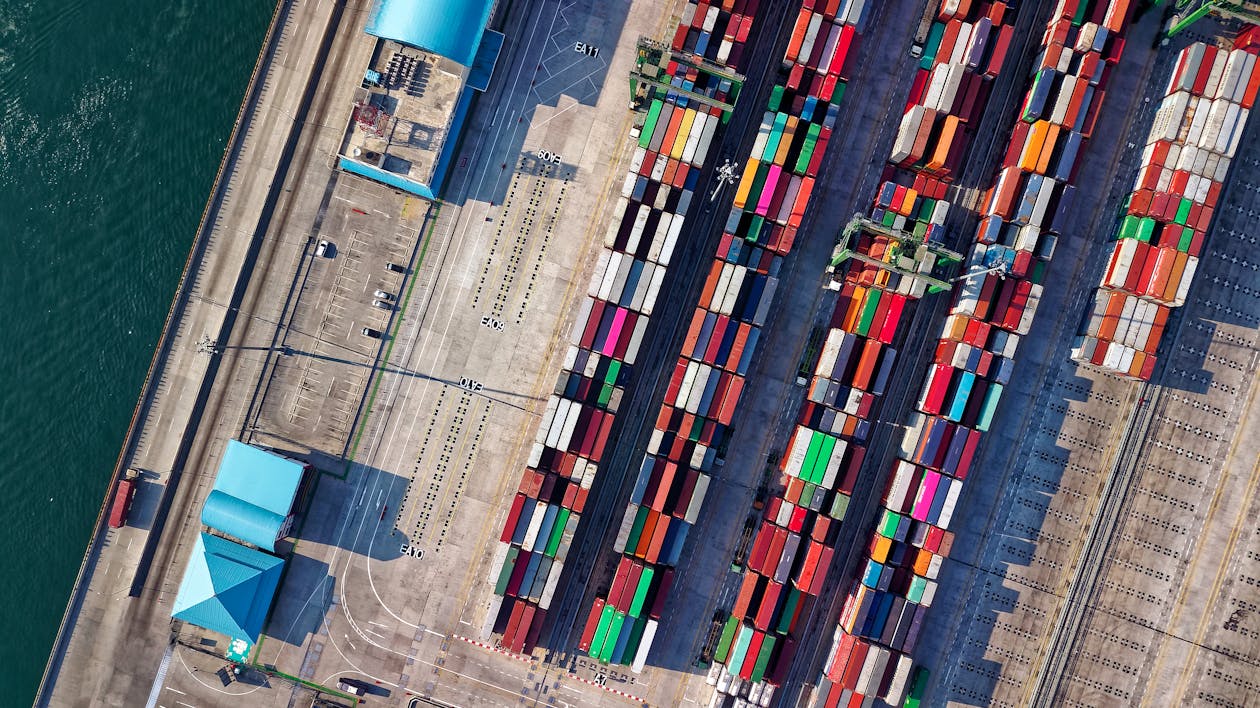
Introduction: Why Indonesia's Port Map Matters to Ship Operators
Indonesia is the largest archipelagic nation on earth, with more than 17,000 islands and a coastline approaching 100,000 kilometres. This geography makes ports the absolute backbone of the national economy and a critical node in global shipping. For shipowners, operators, and charterers, understanding the Indonesian port map is not supplementary knowledge but a direct determinant of cost efficiency and schedule reliability.
Every year thousands of merchant vessels transit the Malacca, Sunda, and Lombok Straits, three of the world's principal shipping chokepoints, all of which lie within or immediately adjacent to Indonesian jurisdiction. Vessels calling for bunkering, crew change, repairs, or cargo operations must navigate a layered regulatory structure that varies in intensity from one region to the next. Choosing the wrong port of call can translate directly into demurrage, delayed crew rotations, or detention by Port State Control.
This guide sets out a complete overview of Indonesian ports: the official classification under national law, profiles of the major ports from Sumatra to Papua, standard arrival and departure procedures, and practical considerations for matching a port to a specific operational need. It draws on Nusantika's field experience as a ship agency serving the national port network around the clock.
Classification and Governance of Indonesian Ports
The governing legal framework is Law No. 17 of 2008 on Shipping, implemented through Government Regulation No. 61 of 2009 on Port Affairs. These instruments divide seaports into three functional tiers: main ports, collector ports, and feeder ports, with the latter further split into regional and local categories. The tier determines permissible draft, the class of vessel allowed alongside, and which government agencies maintain a permanent presence at the port.
Main ports handle large volumes of domestic and international traffic and act as gateways for foreign trade. Collector ports serve as inter-provincial distribution nodes, while feeder ports connect remote regions to the primary network. Of roughly 2,500 registered port locations across Indonesia, only about one hundred hold commercial status with facilities capable of handling large merchant vessels.
Governance involves several institutions that operators must understand. The Ministry of Transportation, through the Directorate General of Sea Transportation, is the apex regulator. At each port, the Harbourmaster and Port Authority Office, known locally as KSOP, issues the Sailing Approval Letter and exercises safety oversight. Most commercial terminals are operated by PT Pelabuhan Indonesia, or Pelindo, which since the October 2021 merger of four regional companies operates as a single entity with separate sub-holdings for container, non-container, logistics, and marine services.
In recent years all vessel service processes have been integrated through Inaportnet, a national electronic platform linking KSOP, Customs, Immigration, Quarantine, and terminal operators into one digital workflow. Ship agents must submit service applications through this system, and without a registered local agent account a foreign vessel simply cannot process its arrival. This is the fundamental reason why appointing a local agent and arranging PKKA services is mandatory rather than optional.
Major Ports in Western Indonesia
Tanjung Priok in North Jakarta is the busiest port in Indonesia and handles more than half of the national container throughput. The complex includes New Priok Container Terminal One, Jakarta International Container Terminal, Koja Container Terminal, plus conventional berths and liquid bulk facilities. Draft at the newer terminals reaches into the low teens in metres, allowing post-panamax calls, and its position roughly an hour from Soekarno-Hatta International Airport makes it the default choice for large-scale crew rotations.
Belawan in North Sumatra serves the largest palm oil and rubber plantation hinterland in the country. It offers a container terminal, CPO liquid bulk facilities, and conventional berths, with airport access of roughly one and a half to two hours from Kualanamu. Belawan is a strategic call for product tankers and bulk carriers operating along the western approaches to the Malacca Strait.
Batam, with the Batu Ampar and Sekupang terminals, occupies a unique position as a free trade zone sitting directly on the Singapore Strait. Many operators use Batam as an alternative crew change point because vessels can lie at nearby off-port limits anchorages and international ferry connections run almost hourly. The dense concentration of shipyards on the island also makes it a preferred location for emergency repairs and docking.
Other significant western ports include Dumai in Riau, the country's largest CPO and petroleum terminal; Boom Baru in Palembang, served by the Musi River channel; Panjang in Lampung, the gateway for Sumatra-Java traffic; Teluk Bayur in Padang for cement and coal; and Tanjung Emas in Semarang supporting Central Java manufacturing. Each has distinct draft limitations and tidal patterns, so berthing schedules must be planned against local hydrographic data rather than generic assumptions.
Major Ports in Central and Eastern Indonesia
Tanjung Perak in Surabaya is Indonesia's second largest port and the distribution centre for East Java and the entire eastern region. Its complex comprises Surabaya Container Terminal, the semi-automated Teluk Lamong Terminal, and the Jamrud berths for general cargo. The Western Surabaya Access Channel has been deepened to accommodate larger vessels, and proximity to Juanda International Airport streamlines crew change services.
Balikpapan in East Kalimantan, comprising Semayang Port and the Pertamina refinery terminals, is the centre of the national oil and gas industry. It handles tankers, offshore supply vessels, and upstream support craft at high intensity throughout the year. Banjarmasin with its Trisakti Terminal and Samarinda along the Mahakam River are the primary coal export gateways, though both carry river draft constraints that demand careful tidal planning.
Makassar, through Soekarno-Hatta Port, is the consolidation hub for eastern Indonesia and a natural transit point for vessels transiting the Makassar Strait. Bitung in North Sulawesi functions as a fisheries centre and the exit gateway toward the Philippines and the Pacific, supported by special economic zone status. Both offer relatively short airport transfers and are worth considering for crew rotations on eastern routes.
In the far east, Ambon serves the Maluku fisheries industry, Sorong acts as the oil and gas logistics base for West Papua, and Jayapura supports essential goods distribution across Papua. Pontianak in West Kalimantan via the Kapuas River and Benoa in Bali for cruise traffic complete the national picture. For vessels operating in these areas, spare parts and provisions availability is more limited, so maritime logistics services must be coordinated well ahead of arrival.
Standard Vessel Arrival and Departure Procedures
The service workflow is uniform across Indonesian ports, although processing times vary by location. The ship agent must submit an arrival notification with the vessel's documentation between 24 and 72 hours before estimated time of arrival, depending on local KSOP requirements. Core documents include the crew list, ship particulars, class certificates, the International Ship Security Certificate, the Maritime Declaration of Health, cargo manifest, and last port clearance.
Once documents are verified, the agent lodges a vessel service request through Inaportnet to obtain arrival confirmation, berth allocation, and pilot and tug scheduling. Pilotage is compulsory at virtually all main ports, and anchorage, berthing, pilotage, and towage charges are assessed on gross tonnage. On arrival alongside, a joint inspection by Customs, Immigration, and Health Quarantine is conducted on board before cargo operations or crew movements are permitted.
For departure, the agent applies to the Harbourmaster for the Sailing Approval Letter, attaching proof of settlement for all port services, final cargo documentation, and an updated crew list. The letter will not be issued where certificates are deficient, Port State Control findings remain open, or crew disputes are unresolved. Under normal conditions issuance takes a few hours, but a single missing document can hold a vessel overnight.
All Indonesian international ports apply the ISPS Code, with security levels declared by the Directorate General of Sea Transportation. Vessels must complete a Declaration of Security and observe personnel access procedures within terminal areas. For crew changes, joining and departing personnel must hold valid immigration documentation, arranged through seafarer visa services well in advance of the vessel's arrival.
Choosing the Right Port for the Operational Need
Port selection should never rest solely on the shortest deviation from the trading route. For crew change, the decisive factors are transfer time to an international airport and onward flight availability, where Tanjung Priok, Tanjung Perak, Batam, and Makassar clearly lead. For bunkering, licensed supplier availability and fuel quality compliant with IMO sulphur limits govern the decision, with Tanjung Priok, Balikpapan, and the waters around Batam being the most mature locations.
For vessels requiring repairs, the shipyard clusters at Batam and Surabaya offer the broadest docking capacity and the most complete spare parts supply chains. For bulk carriers and tankers on commodity routes, the governing considerations are draft limits, tidal windows, and berth queues, which at some coal terminals can extend to several days during peak season. Historical waiting time data from a local agent is far more reliable than generic estimates published in shipping directories.
Finally, total cost analysis must include port dues, pilotage, agency fees, inland transport, crew accommodation, and potential overtime charges for government agencies outside working hours. A port with lower headline tariffs is not necessarily cheaper if the airport transfer is long or document processing is slow. A full cost comparison prepared with an experienced agent typically delivers far greater savings than simply hunting for the lowest berthing rate.
FAQ
Q: How many major ports does Indonesia have?
A: Indonesia has roughly 2,500 registered port locations, but only about one hundred hold commercial status and approximately twenty-eight are classified as main ports under the National Port Master Plan. These main ports handle international traffic and host full Customs, Immigration, Quarantine, and Port authority presence on site. The remainder are collector or feeder ports with more limited service scope.
Q: Can a foreign vessel call at an Indonesian port without a local agent?
A: No. Indonesian regulations require every foreign vessel to appoint a registered national ship agency to handle the full arrival and departure process. The local agent holds access to the Inaportnet system and carries legal responsibility for document processing before KSOP, Customs, Immigration, and Quarantine.
Q: Which Indonesian port is most efficient for crew change?
A: Tanjung Priok is generally the fastest option thanks to its proximity to Soekarno-Hatta International Airport and the full-time presence of all relevant agencies. Tanjung Perak in Surabaya is a strong alternative for East Java routings, while Batam suits vessels transiting the Singapore Strait. The final choice still depends on the vessel's route, crew nationalities, and flight availability.
Q: How long does port clearance take in Indonesia?
A: With complete documentation submitted on time, arrival processing through to berthing typically takes a few hours, and the Sailing Approval Letter can be issued within a similar window. Delays usually stem from inconsistent documentation, unsettled service payments, or submissions made outside agency working hours. Preparing documentation 72 hours before arrival is best practice.
Conclusion
Indonesia's port map is vast and varied, ranging from million-TEU container terminals at Tanjung Priok to river berths in Kalimantan that depend on the tidal cycle. Understanding port classification, the respective authority of KSOP and Pelindo, and the Inaportnet digital workflow is the foundation of efficient vessel operations in Indonesian waters. Small planning errors at the port selection stage become large costs in waiting time and penalties.
The key is early planning and choosing an agency partner with genuine national coverage. Nusantika serves all major Indonesian ports including Tanjung Priok, Tanjung Perak, Belawan, Balikpapan, Makassar, Batam, Bitung, Pontianak, and Semarang, backed by support services available around the clock.
Butuh bantuan crew change di Indonesia? Hubungi Nusantika via WhatsApp — kami siap 24/7.