
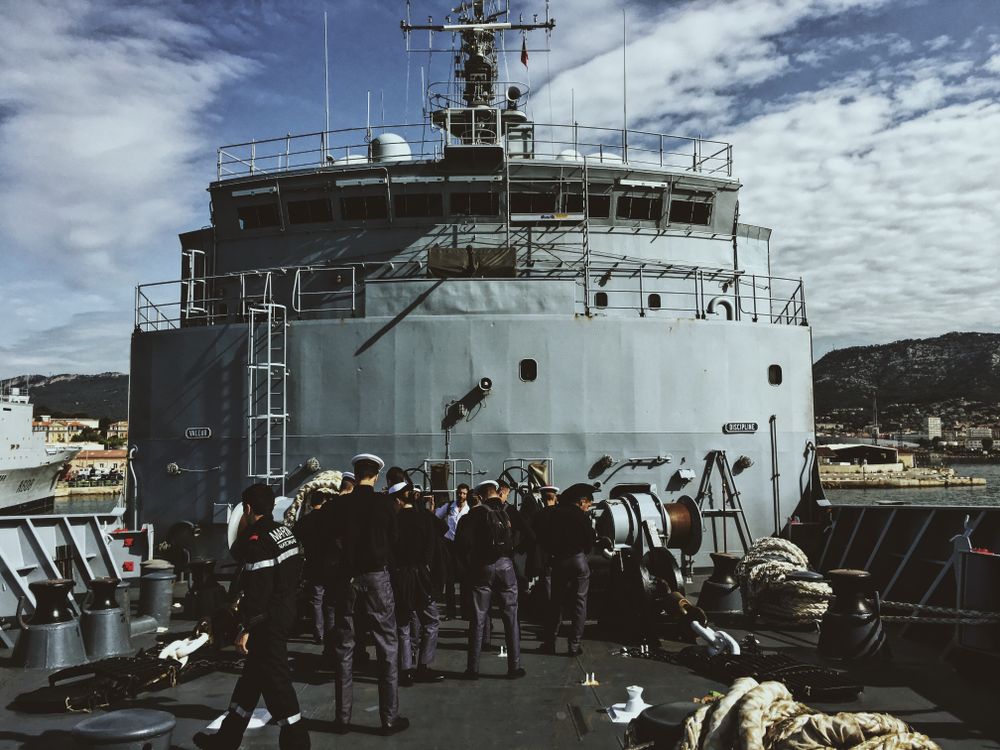
Introduction: Why MLC 2006 Is the Fourth Pillar of Maritime Regulation
Global shipping rests on four pillars of international regulation, and MLC 2006 is the one that speaks most directly to the people behind every vessel operation. Where SOLAS governs ship safety, MARPOL governs pollution prevention, and STCW governs seafarer competence, MLC 2006 governs the dignity, rights, and welfare of seafarers themselves. For ship operators calling at Indonesian ports, understanding this convention is not an administrative formality but the foundation for avoiding detention and protecting operational continuity.
The Maritime Labour Convention 2006 is widely known as the Seafarers' Bill of Rights. It was adopted by the International Labour Organization in February 2006 and entered into force internationally on 20 August 2013 once the ratification threshold was met. Since then, MLC 2006 has served as the single consolidated reference that replaced more than sixty scattered ILO maritime labour instruments that had proven difficult to apply consistently across flags.
In day-to-day ship agency work, MLC 2006 standards appear in very concrete forms: Port State Control officers reviewing rest hour records, employment agreements verified during crew change, and financial security certificates checked against the bulkhead. Operators who overlook these details often discover the problem only when the vessel is already detained. This article breaks down MLC 2006 in full, from the structure of the convention to how it is enforced across Indonesian ports.
What MLC 2006 Is and How the Convention Is Structured
MLC 2006 is an international labour convention that sets minimum standards for the working and living conditions of virtually all seafarers serving on commercial vessels. It applies to all ships, whether publicly or privately owned, that are ordinarily engaged in commercial activities. The principal exclusions are fishing vessels, ships of traditional build such as wooden dhows and junks, and warships or naval auxiliaries.
The convention is deliberately layered so that it remains flexible without losing binding force. The first layer consists of the Articles and Regulations, which set out fundamental rights, principles, and the general obligations of member states. The second layer is the Code, divided into Part A containing mandatory Standards and Part B containing non-mandatory Guidelines. Ratifying states must implement Part A, while Part B must be given due consideration as a statement of recognised best practice.
All substantive material is grouped into five Titles that follow the full arc of a seafarer's working life. This structure makes it straightforward for operators to map their obligations, from before a seafarer joins the vessel through to the end of the contract. A working knowledge of all five Titles is the starting point for any internal audit or inspection preparation.
The Five Titles of MLC 2006 and the Core Rights of Seafarers
Title 1 — Minimum Requirements for Seafarers to Work on a Ship
Title 1 establishes the entry gate to the profession and covers four principal areas. The minimum age for working on board is 16, while night work and hazardous work are restricted to seafarers aged 18 and above. Every seafarer must hold a valid medical certificate, which is generally valid for a maximum of two years, or one year for seafarers under 18, with colour vision certificates valid for up to six years.
The next area is training and qualification, which in practice interlocks closely with the STCW regime and with routine crew change services. No seafarer may work on board without completing recognised basic safety training. The final area regulates recruitment and placement services, prohibiting any recruitment fee being charged to the seafarer and requiring agencies to operate protection systems and compensation mechanisms.
Title 2 — Conditions of Employment and the Employment Agreement
Title 2 is the most frequently inspected section because its requirements are readily verifiable from documents. Every seafarer is entitled to a written Seafarers' Employment Agreement signed by both the seafarer and the shipowner, with an original copy retained by the seafarer on board. The agreement must clearly state the identity of the parties, wages, hours of work, leave entitlement, repatriation provisions, health coverage, and termination conditions.
Hours of work and rest are regulated with precision and generate the most common findings. MLC 2006 sets a minimum of 10 hours of rest in any 24-hour period and 77 hours in any seven-day period. Rest may not be divided into more than two periods, one of which must be at least six hours long, and the interval between consecutive rest periods must not exceed 14 hours. Daily rest hour records must be maintained, signed by both the seafarer and the master, and made available for inspection.
Repatriation rights surface constantly in agency work. Seafarers are entitled to be repatriated at no cost to themselves at the end of their agreement, when the agreement is terminated by either party on justified grounds, or when they are no longer able to carry out their duties. The maximum period of service on board before a seafarer becomes entitled to repatriation is less than 12 months, and because annual leave accrues at a minimum of 2.5 days per month of employment, industry practice generally caps contracts at 11 months.
Title 3 — Accommodation, Recreational Facilities, Food and Catering
Title 3 governs the quality of the living space seafarers occupy for months at a time. Requirements cover minimum cabin dimensions, headroom, ventilation and heating, lighting, sanitary facilities, mess rooms, and recreational facilities. Most construction-related requirements apply to ships built on or after the date the convention entered into force for the flag state concerned, so older tonnage is subject to specific transitional arrangements.
Food and catering provisions are equally mandatory and frequently underestimated by operators. Food must be supplied free of charge in adequate quantity, nutritional value, quality, and variety, with due regard to the cultural and religious backgrounds of the crew. Ships' cooks must be trained and qualified to the satisfaction of the flag state, and no seafarer under 18 may serve as ship's cook. Documented inspections of food stores, drinking water, and galley hygiene must be carried out at least weekly.
Title 4 — Health Protection, Medical Care, Welfare and Social Security
Title 4 ensures seafarers receive health protection and medical care comparable to that available to shore-based workers, at no cost to themselves. Ships must carry an appropriate medicine chest, medical equipment, and medical guide, and must have free access to radio or satellite medical advice around the clock. Ships carrying 100 or more seafarers on international voyages of more than three days must carry a qualified medical doctor.
This Title also sets out shipowner liability for medical expenses and wage continuation when a seafarer falls ill or is injured in connection with their employment. Seafarers additionally have the right to access shore-based welfare facilities in ports of call and to social security protection from their country of residence. Occupational safety policies and accident prevention programmes must be documented within the vessel's safety management system.
Title 5 — Compliance and Enforcement
Title 5 is the enforcement engine of the convention and divides responsibility three ways. Flag state responsibilities cover inspection and certification, port state responsibilities cover the inspection of foreign vessels through Port State Control, and labour-supplying responsibilities cover oversight of recruitment agencies. These operate simultaneously, meaning a single vessel may be scrutinised from several directions during one voyage.
The no more favourable treatment principle extends the practical reach of MLC 2006 far beyond ratifying states. Ships flying the flag of a non-ratifying state may still be inspected when calling at ports of member states and must not receive treatment more favourable than ships of ratifying states. As a result, compliance with MLC 2006 is effectively mandatory for almost every commercial vessel trading internationally.
MLC Certification: Maritime Labour Certificate and DMLC
Ships of 500 GT or more engaged in international voyages, or operating from a port in another country, must carry a Maritime Labour Certificate and a Declaration of Maritime Labour Compliance. The certificate is issued by the flag state or an authorised Recognized Organization once the ship passes inspection across the fourteen areas listed in Appendix A5-I of the convention. It is valid for five years, subject to at least one intermediate inspection carried out between the second and third anniversary dates.
The DMLC comes in two parts that are often confused in practice. DMLC Part I is drawn up by the flag state authority and lists the national requirements implementing each MLC area. DMLC Part II is drawn up by the shipowner and describes the concrete measures adopted on that specific ship to meet the Part I requirements, including procedures for ongoing verification. Both must be attached to the certificate and posted where the crew can readily consult them.
The fourteen inspection areas comprise minimum age, medical certification, seafarer qualifications, employment agreements, use of licensed recruitment services, hours of work and rest, manning levels, accommodation, on-board recreational facilities, food and catering, health and safety and accident prevention, on-board medical care, on-board complaint procedures, and payment of wages. Auditing these fourteen areas one by one is the most efficient way to find compliance gaps before an inspector does.
How MLC 2006 Is Implemented in Indonesia
Indonesia ratified MLC 2006 through Law Number 15 of 2016 on the Ratification of the Maritime Labour Convention, 2006, with the convention entering into force for Indonesia one year after the instrument of ratification was registered with the ILO. This places Indonesia in a dual position of real significance, acting both as a flag state for its national fleet and as the world's largest supplier of seafarers. That combination gives MLC enforcement in Indonesia a broader dimension than in most jurisdictions.
The Directorate General of Sea Transportation under the Ministry of Transportation acts as the competent authority for MLC inspection and certification of Indonesian-flagged vessels, with certain functions delegated to Recognized Organizations such as classification societies. On the port state side, marine inspectors under the Harbour Master conduct Port State Control on foreign vessels, and Indonesia's membership of the Tokyo MOU means inspection results feed into the regional database. Serious MLC deficiencies can lead to detention until the shortcomings are rectified.
Protection for Indonesian migrant seafarers is reinforced by an additional legal framework, including Law Number 17 of 2008 on Shipping and regulations governing the placement and protection of migrant commercial vessel crew. Recruitment and placement agencies must hold valid licences, are prohibited from charging placement fees to seafarers, and must ensure employment agreements are signed and registered before departure. For foreign operators recruiting Indonesian crew, working exclusively with licensed agencies is the most basic form of risk mitigation.
In daily operations, MLC and agency work intersect most visibly at crew change. Seafarer visa services and the issuance of PKKA port clearance must be sequenced against each seafarer's remaining service period so that repatriation is never delayed into a finding. Early coordination between operator, agent, and port authorities at Tanjung Priok, Tanjung Perak, Belawan, Balikpapan, Batam, and Makassar is what keeps MLC compliance from colliding with the vessel's schedule.
MLC 2006 Amendments Every Operator Should Know
MLC 2006 was designed as a living instrument that can be updated through a tacit amendment procedure, so its content evolves with the industry. The 2014 amendments, in force from 18 January 2017, introduced mandatory financial security covering two situations: seafarer abandonment, and contractual claims arising from death or long-term disability. Financial security certificates from providers such as P&I Clubs must be posted in a conspicuous place on board and are among the first items an inspector looks for.
The 2016 amendments required member states to ensure measures are in place to address harassment and bullying on board, and provided flexibility for extending certificate validity in defined circumstances. The 2018 amendments confirmed that employment agreements and wage payments continue while a seafarer is held captive as a result of piracy or armed robbery at sea. That provision grew directly out of cases where seafarers lost their income precisely when their families needed it most.
The 2022 amendment package brought changes that are felt in everyday operations. They include the obligation to provide appropriately sized personal protective equipment for every seafarer, guaranteed free access to safe drinking water, an explicit statement that shore leave must not be unreasonably denied, and encouragement of social connectivity including internet access on board. For operators, this means updating shipboard procedures and adjusting operating budgets well in advance rather than reactively.
Complaint Procedures and Inspection Readiness
Every ship must carry a written on-board complaint procedure that is fair, effective, and expeditious, with a copy provided to each seafarer. The procedure must allow seafarers to complain directly to the master or to external authorities, name a person who can provide confidential advice, and expressly prohibit victimisation of any seafarer who files a complaint. This document is one of the first things an inspector asks for when examining Title 5.
On the port state side, seafarers and other parties may lodge onshore complaints with inspectors at the port of call. Officers will normally seek resolution at ship level first, but complaints involving serious or repeated breaches may be escalated to the flag state and can trigger a more detailed inspection. Prompt, documented handling at ship level almost always produces a better outcome than escalation.
Practical preparation ahead of an Indonesian port call should include verifying the validity of the MLC certificate and DMLC, confirming complete employment agreements for the full crew, reconciling rest hour records against the deck and engine logs, assembling wage evidence in the form of payslips and transfer records, and checking that financial security certificates are correctly posted. A capable support services team will pre-screen these documents before the vessel berths. This simple step measurably reduces the risk of findings that delay departure.
FAQ
Q: Does MLC 2006 apply to Indonesian-flagged vessels trading only domestically?
A: The substantive requirements of MLC 2006, as given effect through national regulation, apply in principle to Indonesian-flagged commercial vessels including those operating in domestic waters. However, the obligation to carry a Maritime Labour Certificate and DMLC attaches specifically to ships of 500 GT and above engaged in international voyages or operating from a port in another country. Domestic vessels may still be inspected for compliance with wage, rest hour, accommodation, and employment agreement requirements by the national authority.
Q: What is the maximum contract length for a seafarer under MLC 2006?
A: The convention provides that the maximum period of service on board before a seafarer is entitled to repatriation is less than 12 months. Because seafarers also accrue paid annual leave at a minimum of 2.5 calendar days per month of employment, the safe industry practice is to cap contracts at 11 months. Exceeding this without justification is likely to be recorded as a serious finding during a Port State Control inspection.
Q: Who bears the cost of repatriating a seafarer?
A: Repatriation costs are borne entirely by the shipowner and may not be charged to the seafarer, except in cases of serious default of employment obligations established in accordance with applicable law. Covered costs include travel tickets, accommodation and meals in transit, wages for the travel period, and transport of a reasonable quantity of personal effects. Where a shipowner fails to meet this obligation, the mandatory financial security system introduced by the 2014 amendments operates as the backstop.
Q: What happens if a vessel is found non-compliant with MLC during an inspection in Indonesia?
A: The inspector will record the deficiency and set a rectification deadline proportionate to its seriousness. Minor deficiencies typically must be corrected before departure or within a defined period, while deficiencies that endanger the safety, health, or security of seafarers can result in detention until they are remedied. In certain cases the port authority will also report the findings to the flag state and to the relevant seafarers' organisations.
Conclusion
MLC 2006 changed how the shipping industry regards seafarers, shifting them from an operational input to rights holders protected by a binding international instrument. For ship operators, compliance with MLC 2006 standards is not an added burden but a direct investment in operational stability, fleet reputation, and the retention of competent crew. Clean documentation, consistently applied procedures, and realistic crew change planning are what separate vessels that clear inspection smoothly from those detained for days.
In Indonesia, given its dual role as flag state and as the world's largest source of seafarers, MLC enforcement will continue to strengthen as inspection capacity and regional data integration improve. Operators who build compliance into voyage planning rather than addressing it once the vessel is alongside will consistently find themselves in a far safer position. Partnering with a local agent who understands both the convention's requirements and the working practices of the port authority is the most efficient way to get there.
Need crew change support in Indonesia? Contact Nusantika on WhatsApp — we are available 24/7.